
Stories Worn on Sleeves
Literature has long been more than words on paper. A character’s wardrobe can shape imagination just as much as dialogue or setting. When Jay Gatsby throws his silk shirts into the air or when Elizabeth Bennet walks across a muddy field in plain shoes a generation sees itself mirrored in fabric and cut. The link between style and story lingers far beyond the page.
The beauty of this connection lies in its reach. People can find a very wide collection of books using Z-library which means the chance to explore not only stories but also the fashion echoes carried inside them. Each outfit and accessory becomes a thread linking the fictional world with real wardrobes across decades. Readers are not only swept into plots but also find new ways of dressing that mark entire eras.
Icons That Stepped Off the Page
Consider Holly Golightly from “Breakfast at Tiffany’s.” She embodied an effortless grace that shaped wardrobes for decades. Her little black dress became a shorthand for elegance while her oversized sunglasses gave confidence to countless women walking city streets. She was written as whimsical yet her clothes carried the power of armor. The ripple of her image reached far beyond Truman Capote’s novel and settled into the cultural bloodstream.
Another example lives in the windswept world of Emily Brontë. Catherine Earnshaw’s gowns and windswept hair in “Wuthering Heights” turned rugged romance into a visual identity. Artists filmmakers and designers drew from her look to create a brand of passion that feels timeless. These characters did not need glossy magazines to spread their influence. Their stories traveled mouth to mouth page to page and later screen to screen until they became household style names.
Here are three characters whose fashion sense became a compass for style movements:
Jay Gatsby
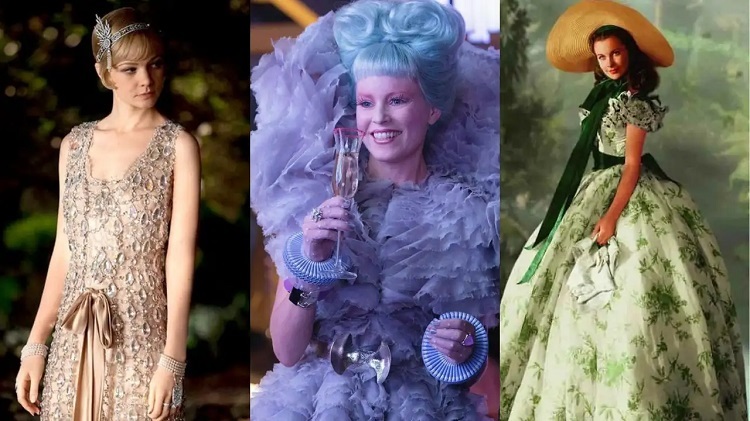
Gatsby’s white suits pastel shirts and gold cufflinks showed wealth yet hinted at longing. His wardrobe told a story of reinvention and obsession with status. When men in the twenties and thirties wanted to impress they often mirrored this vision of polished glamour. Even decades later designers returned to his image to sell a dream of elegance mixed with fragility. What stands out is how clothes carried his entire narrative arc. His shirts were not just cloth but symbols of yearning for Daisy and for a life that remained out of reach. The very excess of his wardrobe became a metaphor for ambition without anchor.
Scarlett O’Hara
In “Gone with the Wind” Scarlett stitched a gown out of green curtains. That single act became a lesson in resilience and boldness. Women saw not only beauty but also resourcefulness wrapped in velvet. Fashion historians still point to that moment as proof of how style can rise out of desperation. Her look mixed Southern grace with survival instinct. Through her gowns the world saw that beauty could be a strategy. The dress made of curtains turned into a cultural symbol of making do with flair when resources are scarce. This combination of defiance and elegance ensured her place among icons of style.
Sherlock Holmes
Few wardrobes are as instantly recognizable as Holmes with his deerstalker hat and long coat. Though Arthur Conan Doyle never leaned too heavily on these items illustrators and later films locked the image in public mind. His look became shorthand for intellect and sharp reasoning. The coat and hat carried a kind of uniform that inspired generations of sleuths both fictional and real. Beyond the detective world fashion houses reworked his silhouette turning it into practical yet stylish outerwear for cold city streets. Holmes proved that style can signal authority and mystery in equal measure.
Their wardrobes were not only outfits but language spoken without words. Designers from haute couture to streetwear borrowed from these fictional closets weaving echoes of them into new creations.
Style as Cultural Memory
When a reader recalls Holden Caulfield’s red hunting cap or Daisy Buchanan’s sparkling dress memory mixes with emotion. Clothes can be as telling as monologues. The act of wearing becomes a form of storytelling and each new reader reimagines it again. These characters may never walk into a fashion show yet their impact shows up on runways billboards and even vintage racks in small towns.
The power of literary fashion rests in how it bridges fiction and daily life. Characters wear their struggles and triumphs on their sleeves and those details slip quietly into collective wardrobes. Long after the book closes the style remains a whisper in closets across generations reminding that sometimes the strongest stories are told not through words but through fabric.
 makupstyle.fashion.blog